Test header
Key Areas of Support
Protection against Violence and Harm
![]() | The Government has been progressively implementing the recommendations by the Taskforce on Family Violence and continues to invest in public education and work closely with community partners on comprehensive social service support. |
The Government is working towards enacting a Domestic Violence Act, to extend better protection to all in familial and non-familial relationships.
The Government has been working to enhance the relevant legal frameworks to better protect Singapore citizens, especially women and girls online. This includes the introduction of the Online Safety (Miscellaneous Amendments) Act in 2022 and the Online Safety (Relief and Accountability) Act (OSRAA) in 2025. OSRAA establishes the Online Safety Commission, a dedicated agency to support victims in seeking timely relief for online harms.
A whole-of-society approach is needed to shore up trust and security in the digital world and to create a safer online environment for all Singapore citizens.
| International and local studies, including SG Her Empowerment’s study on online harms in 2023 and Sunlight Alliance for Action’s survey in 2022, have found that, compared to males, women and girls feel less safe online, and are more vulnerable to gender-based online harms such as sexual harassment and intimate image abuse. This is a grave concern as women should feel safe both in the real world and online. | ![]() |
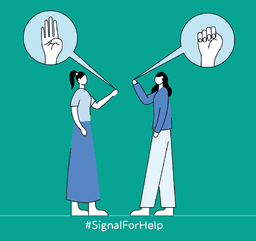
We have also increased awareness and strengthened societal attitudes against domestic violence through the annual “Break the Silence” campaign, and Domestic Violence Awareness Training for individuals from various sectors to learn how to spot and report signs of domestic violence.
To encourage reporting, a one-stop national helpline for anyone experiencing violence was launched in 2021. It was later renamed to the National Anti-Violence and Sexual Harassment Helpline (NAVH) to better reflect service provision for all persons who experience violence, including sexual violence and sexual harassment in familial and non-familial settings.
More information on domestic violence resources here.
Click here for more information on domestic violence resources.
Laws and policies are regularly reviewed and enhanced.
- The Penal Code was amended in 2019 and 2021 to better tackle technology-facilitated crimes and protect vulnerable victims. For instance, the 2019 Penal Code amendments introduced new offences targeting technology-facilitated sexual offences such as acts relating to voyeurism, non-consensual possession and distribution of intimate images, sexual exposure, child abuse materials and sexual communication with minors. The 2019 Penal Code amendments further repealed marital immunity for rape and enhanced and doubled the penalties for offences committed against vulnerable victims, including minors below 14, victims in intimate or close relationships with the offender, and victims with disabilities. In 2021, the Penal Code was further amended to increase the maximum penalties for offences relating to outrage of modesty and engaging in sexual activities in the presence of minors.
- Passed in Parliament in 2023, the Online Criminal Harms Act allows the Government to direct online services to restrict the exposure of Singapore users to online criminal activities, including non-consensual and illegally obtained sexually explicit materials.
- In 2024, as part of the Criminal Procedure (Miscellaneous Amendments) Bill, a new sentencing option was introduced – the Sentence for Enhanced Public Protection (SEPP). – The SEPP allows dangerous adult offenders who commit serious violent and sexual offences and are assessed to pose a risk of committing similar offences again, such as serial rape offenders, to be detained for as long as needed for public safety.
Read more about the advisory on sexual crimes available.
A new Online Safety Commission (OSC) will be established by the first half of 2026 to provide timely, effective, and accessible relief for victims who encounter specified online harms, such as online harassment (including online sexual harassment), online stalking, intimate image abuse and image-based child abuse. Victims may make a report to the OSC, which can issue directions to the communicators of the online harm, administrators of a group or location where the online harm occurred and platforms on which the online harm occurred. This supports the victim to quickly stop online harm without the need for court proceedings.
OSRAA also introduces statutory torts that clarify the duties and liabilities of communicators, administrators and platforms. Victims may institute court proceedings against those who breach these duties, to seek civil remedies such as orders to stop harmful behaviour or compensation for harm suffered. In appropriate circumstances, where the person responsible for the online harm is unknown, victims may seek disclosure of the perpetrator’s identity from the OSC to commence such proceedings.
Read more about OSRAA and the upcoming OSC here.
The amendments allow the Infocomm Media Development Authority (IMDA) to issue directions to disable access by Singapore users to egregious content found on OCSs. Egregious content includes content advocating and instructing on sexual violence.
Under the OSMAA, IMDA has also issued the Code of Practice for Online Safety – Social Media Services and the Code of Practice for Online Safety – App Distribution Services (“ADS Code”) in 2023 and 2025, respectively. The Codes of Practice require designated social media services[2] and designated app distribution services (also known as app stores)[3] to put in place systems and processes to curtail the risk of exposure to harmful online content for Singapore users. Harmful online content includes sexual and violent content.
Additionally, the ADS Code requires designated app stores to implement age assurance measures and ensure that young users under 18, including girls, are restricted from accessing and downloading age-inappropriate apps based on age ratings set by the designated app stores.
Footnotes
[1] At present, the OCSs specified in a Schedule under the BA comprise social media services and app distribution services, also known as app stores.
[2] The six designated social media services are Facebook, HardwareZone, Instagram, TikTok, X and YouTube.
[3] The five designated app distribution services are Apple App Store, Google Play Store, Huawei App Gallery, Samsung Galaxy Store, and Microsoft Store.

.png?sfvrsn=cd8bf600_3)